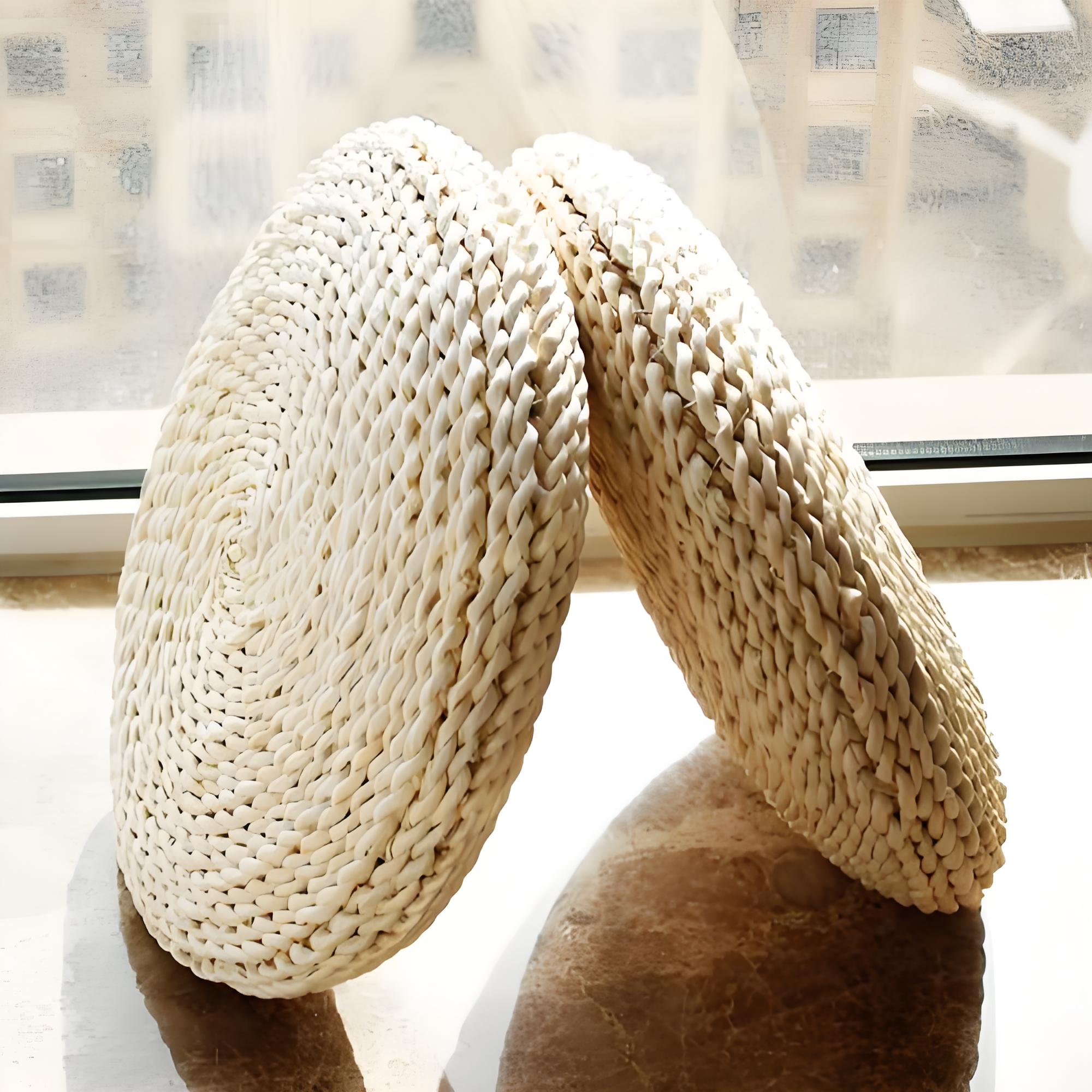
Growing up in the countryside here, the autumn harvest meant more than just golden cornfields—it meant the smell of drying husks and the sight of neighbors weaving them into baskets and mats. That humble corn husk, once just a part of our daily landscape, is now the heart of Pingdu’s weaving tradition.
For generations, corn husk has been the most used and most symbolic material in Pingdu weaving. With corn and millet as our main crops, we have always had more husks than we knew what to do with. Over time, local families turned this abundant by-product into a craft—first for household use, now for the world.
Why corn husk remains our strength:
Heritage of Skill: We didn’t just grow corn; we learned how to select, soften, and weave its husk. That knowledge has been passed down, making our artisans unusually skilled in handling this specific material.
Natural Advantage: Being right where the material is grown means we get the best husks—thicker, more flexible, and in consistent supply. This keeps quality high and costs reasonable.
From Local to Global: What began as a home craft has grown into a signature industry. Today, corn husk represents a large portion of what we produce—from traditional baskets to modern décor—all carrying a piece of Pingdu’s agricultural soul.
In short, corn husk weaving isn’t just a product here—it’s a chapter of our rural life, a testament to local resourcefulness, and a craft that continues to define Pingdu on the global stage.